

Welcome to the Meteor Watch page, a dedicated portal for real-time meteor monitoring and atmospheric observation in Brunei Darussalam. Here, you can view our live camera feeds, explore automated archives of recent meteor detections, and stay informed on upcoming meteor showers with detailed viewing guides and current local weather conditions. Whether you are tracking a major celestial event or simply enjoying the night sky, we invite you to look up and explore; further details about this monitoring project, our equipment, and our scientific objectives can be found at the bottom of the page.
Active Meteor Showers Now
SkyCam 1 (Tutong, Brunei Darussalam)
Cam 1 Live Feed:
Cam 1 Latest Auto Detection:
SkyCam 1 Location: Mini Observatory, Keriam; Direction: Azimuth 120 (East); Elevation 80 degree; Equipment: CCTV ver 1.0, Python Meteor Detection, AI Engine; Frequency: Refresh rate @ 300 secs; Data transmission begins from Sunset to Sunrise.
SkyCam 2 (Tutong, Brunei Darussalam)
Cam 2 Live Feed:
Cam 2 Latest Auto Detection:
SkyCam 2 Location: Mini Observatory, Keriam; Direction: Azimuth 200 (West); Elevation 80 degree; Equipment: CCTV ver 1.0, Python Meteor Detection, AI Engine ; Frequency: Refresh rate @ 300 secs; Data transmission begins from Sunset to Sunrise.
Note about Detection: When meteor (also including satellite, airplane, helicopter, red sprite etc) results are detected, the latest trajectory image is automatically uploaded and shown above. This image features two overlays: a red rectangle highlighting the detected meteor/object, and constellation art positioned accurately according to the night sky calibration.
Meteor Archive: Visit this page to browse past meteor captures and statistics, check historical dates, and view snapshots and gallery of past night-sky activity captured by BruneiAstronomy’s skycams.
Camera 3
In progress…
Meteor Station Project
This webpage is operated and maintained by the Astronomical Society of Brunei Darussalam (PABD) for real-time night-sky monitoring and automated detection of transient atmospheric phenomena.
Relaunched in October 2026 to make observational astronomy accessible to the public, this AI-driven portal integrates live atmospheric data, camera feeds, and an automated event archive into a single, seamless platform.
System Architecture & Capabilities:
Live Multi-Camera Feeds: Streams continuous, real-time video feeds from multiple dedicated camera units (SkyCam 1, SkyCam 2, and AllSky Cam 3) transmitting via Wi-Fi and Ethernet using the RTSP protocol.
Autonomous Operations: Powered by a Windows 11 Pro processing node, the station manages its own operational schedule – automatically initiating analysis at sunset and concluding at sunrise to capture the entire night’s activity without manual intervention.


Above: Meteor trajectory.
AI-Powered Object Detection: A custom Python-based deep-learning engine continuously monitors the video streams, parsing motion to identify meteors, satellites, and passing aircraft. Validated captures are rendered with calibrated constellation overlays and red bounding boxes.
False Positive Filtration: While the real-time feed may occasionally flag non-meteoric events with non-linear trajectories (such as commercial aircraft) as well as thunder and red sprite (large-scale electric discharges that occur in the mesosphere), automated pipelines and secondary reviews systematically filter these out before records reach the permanent archive.


Above: The automated detection pipeline may occasionally display non-meteoric phenomena on the live feed, such as passing aircraft or objects with non-linear trajectories. Following a secondary review, these false positives are systematically excluded from the meteor archive.
Archives & Statistics: Visitors can explore historical logs, activity graphs, trajectory snapshots, and integrated real-time local weather metrics.
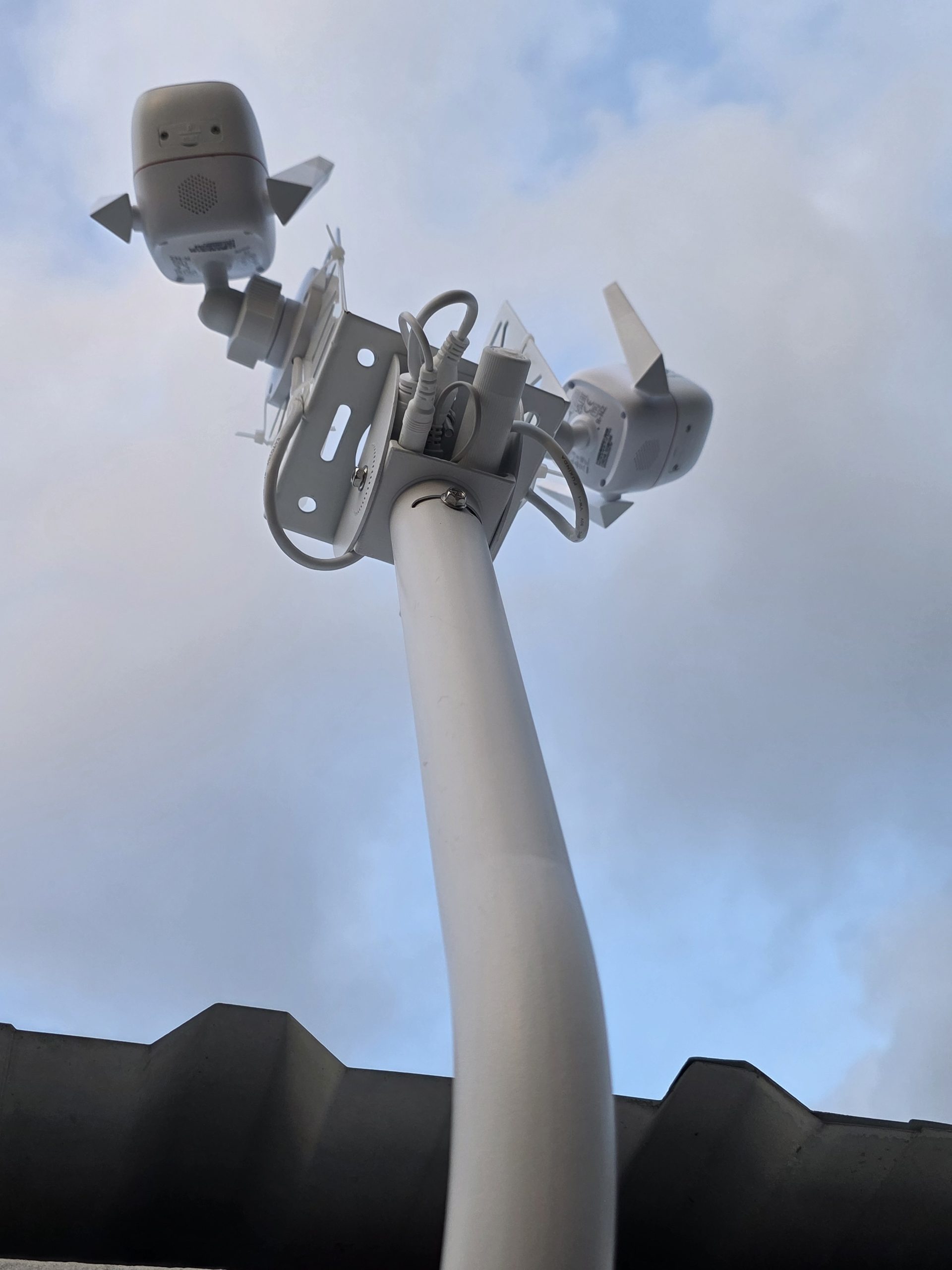

Above: The meteor station is powered by a powerful deep-learning application on a Windows 11 Pro operating system PC designed to capture spectacular celestial moments without the need to manually sift through lengthy video footage or photos. The system operates autonomously -automatically start and stop analysis based on daily sunset times until sunset, ensuring all clips from the previous night are recorded.
Automated Meteor Station Data Pipeline
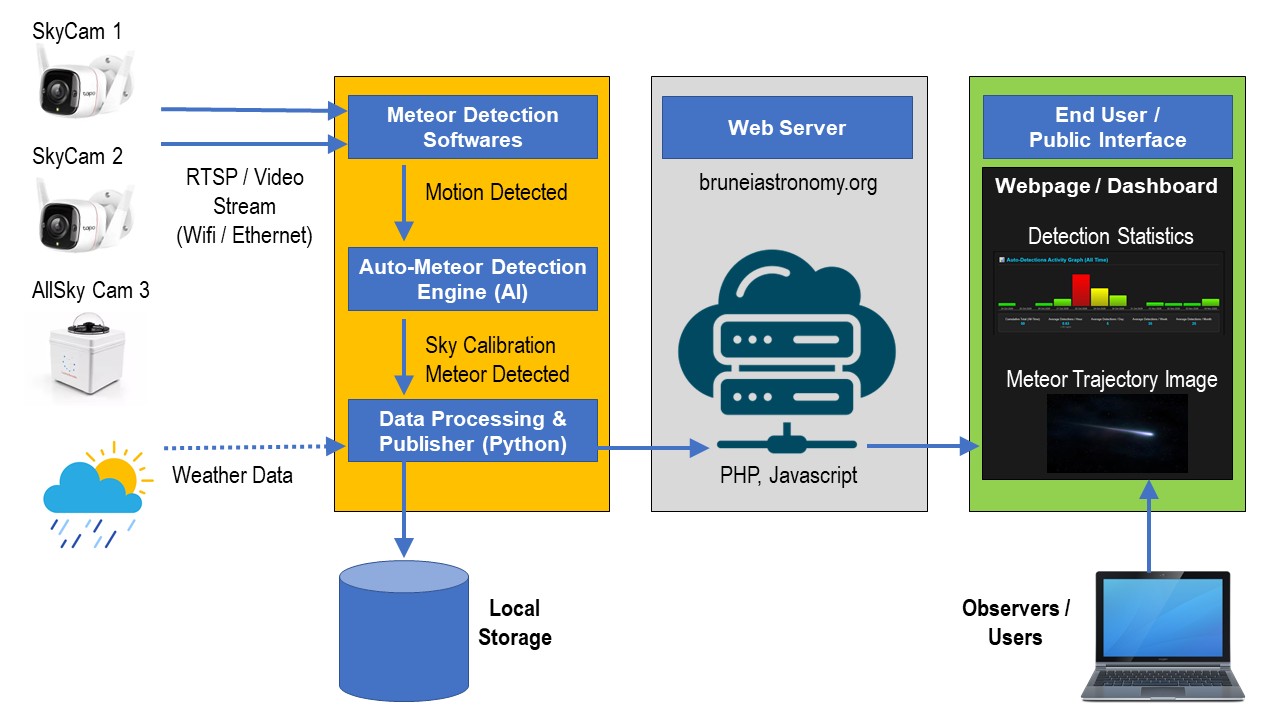
Raw RTSP streams from the field cameras are processed locally by motion-trigger and AI calibration modules. A Python data-processing publisher then syncs these events with live weather telemetry and pushes the structured records to the cloud server hosted at bruneiastronomy.org via PHP and JavaScript for public display.
Build Your Own Station
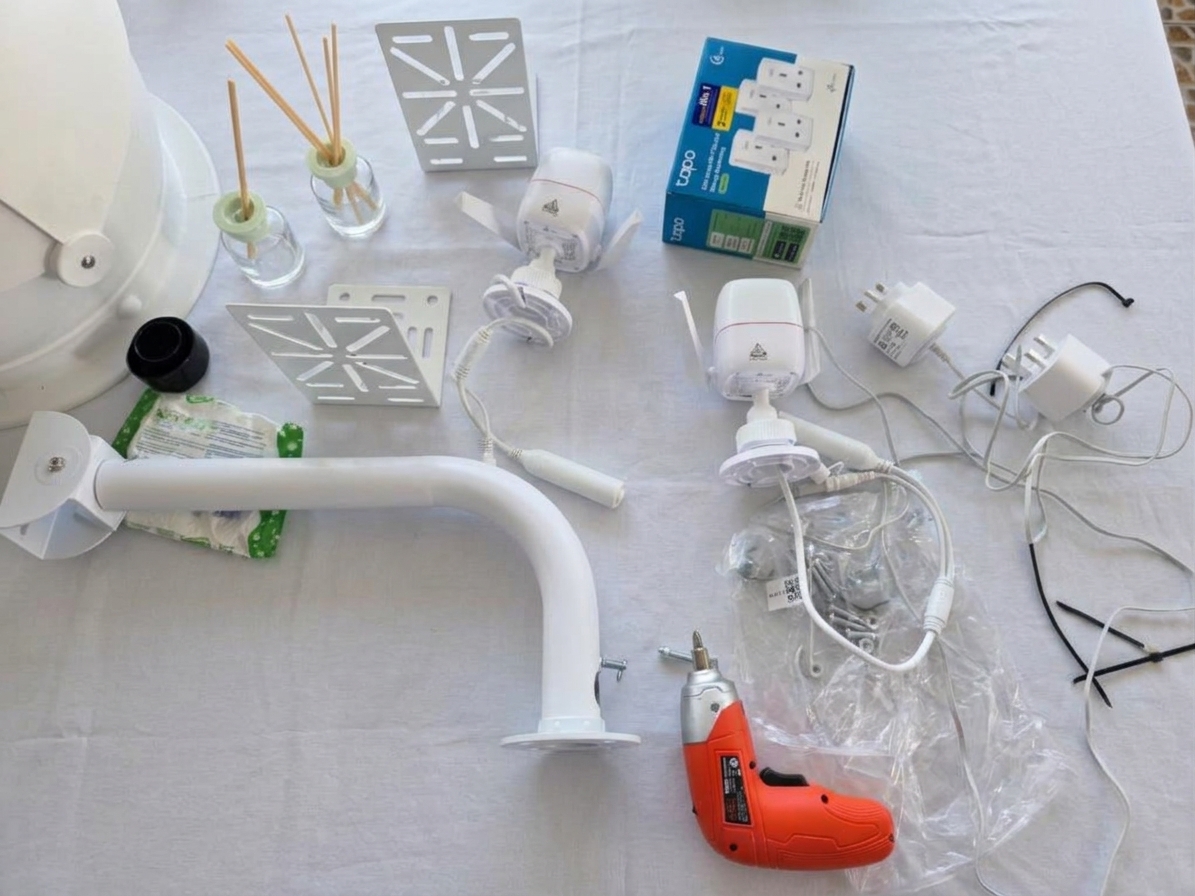
Join the Observation Network Interested in astronomy and meteor tracking in Brunei Darussalam? We invite anyone keen to build their own meteor station and sky camera to reach out to PABD and join our observation network!